



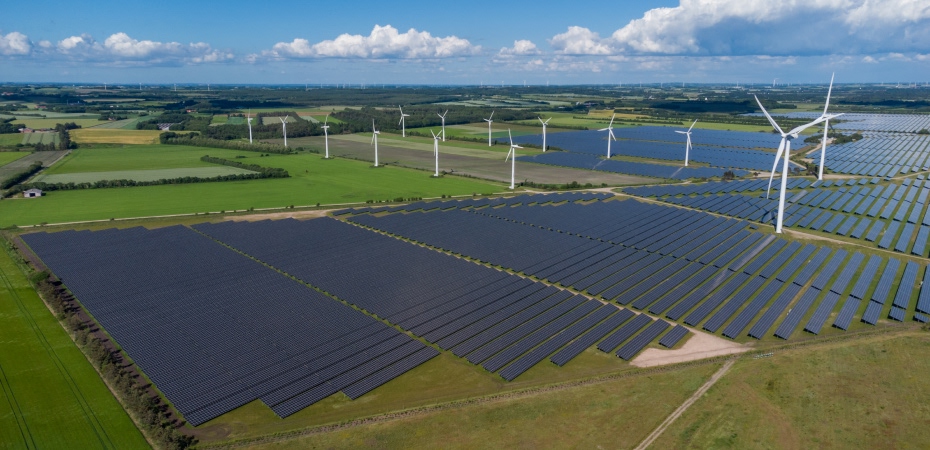
POWER AND ENERGY
The energy transition requires projects to be delivered at speed, across large areas, and with long-term reliability in mind. Power and energy projects often involve variable ground conditions, large-scale earthworks, drainage constraints, access requirements, and infrastructure that must perform safely over decades.
Focus areas
- Utility-scale Solar PV plants
- Onshore wind farms
- Battery Energy Storage Systems (BESS) and substations
- Transmission lines and distribution corridors
- Working platforms, access roads, cabling, drainage, and associated civil infrastructure
OUR SOLUTIONS
- Site Feasibility and Due Diligence: We help clients understand how ground conditions, slope, drainage, access, and existing site constraints may affect project layout. This supports practical layout decisions, helps avoid difficult or unsuitable areas, and reduces unnecessary design changes later in the project.
- Ground Investigation and Foundation Engineering: We plan, execute and interpret geotechnical investigations to support foundation selection, earthworks design, access roads, working platforms, substations, transmission structures, and other project infrastructure. Our work helps clients understand ground conditions, manage geotechnical risk, and make practical design and construction decisions based on real site information.
- Pile Load Testing for Solar PV Projects: We support pile testing campaigns for solar PV projects, including load testing, rammability observations, predrilling considerations, and interpretation of results against real site conditions.
- Hydrological and Hydraulic Assessment: We assess rainfall, runoff, surface water flow, and flood-related constraints to help define practical drainage measures such as swales, culverts, erosion protection, and protection around key project areas.
- Ground and Utility Interfaces: We support thermal and electrical resistivity assessments, underground service routes, earthing design, high-voltage corridors, corrosion risk, internal cabling, and other ground-related utility considerations.

Data Centres
Data centres are high-value, mission-critical assets where ground conditions, settlement control, flood risk, utility routes, access, and external infrastructure must be considered from the earliest stages. A clear understanding of site constraints helps reduce design uncertainty, protect critical systems, and support long-term operational resilience.
Focus areas
- Data centre buildings, campuses, and associated external works
- Substations, backup power areas, and energy infrastructure
- Utility corridors, underground services, and earthing-related ground conditions
- Heavy-duty access roads, service yards, platforms, and security perimeters
- Drainage, flood-risk, and surface water management around critical infrastructure
OUR SOLUTIONS
- Site Feasibility and Ground Risk: We review available site, terrain, ground, utility, and flood-related information to help clients understand whether a location is suitable before major design, acquisition, or investment decisions are made.
- Ground Investigation and Foundation Engineering: We perform and interpret ground investigations to support foundation selection, settlement assessment, earthworks design, access roads, external platforms, utility areas, substations, and other critical project infrastructure.
- Hydrological and Hydraulic Assessment: We assess flood risk, rainfall, runoff, surface water flow, and drainage constraints to help protect critical buildings, electrical areas, access routes, external platforms, and other sensitive infrastructure.
- Earthworks, Access Roads and External Works: We support site preparation, platform formation, heavy-duty access roads, service yards, external paved areas, and construction-stage ground considerations.
- Ground and Utility Interfaces: We support thermal and electrical resistivity assessments, underground service routes, earthing design, high-voltage corridors, corrosion risk, and other ground-related utility interfaces.

Transportation and Connectivity
Transportation and linear infrastructure depend on a clear understanding of terrain, ground conditions, drainage, earthworks, and long-term serviceability. These projects often extend across variable ground and require practical decisions along the full route, not only at isolated locations.
Focus areas
- Roads, rail, and transport infrastructure
- Bridges, crossings, embankments, and retaining structures
- Utility corridors and linear infrastructure routes
- Access roads, service roads, and heavy-duty routes
- Pavements, drainage, earthworks, and associated civil works
OUR SOLUTIONS
- Site Feasibility and Ground Risk: We review terrain, ground conditions, drainage routes, access constraints, and available geospatial information to help identify key risks along roads, rail-related areas, utility corridors, and other linear infrastructure routes.
- Ground Investigation and Foundation Engineering: We plan and interpret geotechnical investigations to support embankments, cuttings, bridge approaches, retaining structures, pavement foundations, access roads, platforms, and other linear infrastructure.
- Hydrological and Hydraulic Assessment: We assess catchments, runoff, water crossings, and surface water flow to support the sizing and positioning of culverts, channels, swales, and other drainage measures along the route.
- Pavement, Subgrade and Materials: We assess soil and subgrade conditions through field and laboratory testing to support pavement design, access tracks, working platforms, material suitability, and compaction requirements.
- Construction Verification: We help define ground verification, material suitability, compaction control, and construction-stage checks so that design assumptions are properly followed on site.
Industrial and Logistics
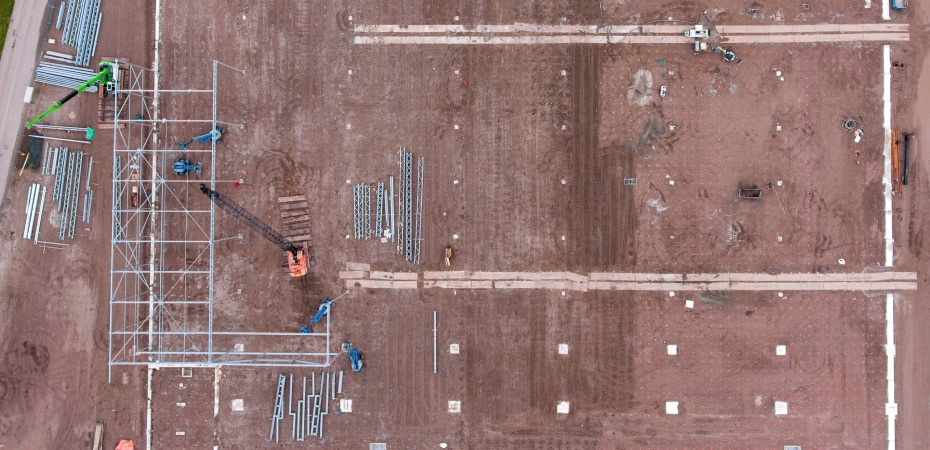
Industrial and logistics developments require reliable foundations, durable floor slabs and pavements, practical drainage, and efficient site preparation. Ground, water, access, earthworks, and platform performance can directly affect construction cost, programme, and long-term operation.
Focus areas
- Industrial, logistics, warehouse, and manufacturing facilities
- Large building platforms, floor slabs, and foundation areas
- Loading yards, service roads, parking areas, and external pavements
- Utility corridors, drainage infrastructure, and external works
- Earthworks, material reuse, access, and construction-stage platforms
OUR SOLUTIONS
- Site Feasibility and Ground Risk: We identify ground-related issues common in urban sites, such as made ground, old buried structures, variable bedrock, soft soils, cavities, contamination indicators, or groundwater constraints.
- Ground Investigation and Foundation Engineering: We plan and interpret geotechnical investigations to support foundation selection, basements, excavations, retaining structures, slab support, earthworks design, and other project infrastructure.
- Hydrological and Hydraulic Assessment: We assess surface water flow, local drainage constraints, groundwater observations, and flood-related issues to support practical drainage and site development decisions.
- Construction Verification: We help define ground verification, monitoring, earthworks control, material suitability, and construction-stage checks so that design assumptions are properly followed on site.

Commercial and Urban Development
Commercial and urban development projects require technical reliability, cost-conscious design, environmental awareness, and smooth integration with surrounding infrastructure. In urban and developed areas, ground risk is often linked to made ground, existing utilities, neighbouring structures, groundwater, and previous site use.
Focus areas
- Commercial, mixed-use, urban, and institutional developments
- Basements, excavations, car parks, and retaining structures
- External works, access, drainage, utilities, and local infrastructure
- Made ground, groundwater, buried obstructions, and neighbouring constraints
OUR SOLUTIONS
- Site Feasibility and Ground RIsk: We identify ground-related issues common in urban sites, such as made ground, old buried structures, variable bedrock, soft soils, cavities, contamination indicators, or groundwater constraints.
- Ground Investigation and Foundation Engineering: We plan and interpret geotechnical investigations to support foundation selection, basements, excavations, retaining structures, slab support, earthworks design, and other project infrastructure.
- Hydrological and Hydraulic Assessment: We assess surface water flow, local drainage constraints, groundwater observations, and flood-related issues to support practical drainage and site development decisions.
- Construction Verification: We help define ground verification, monitoring, earthworks control, material suitability, and construction-stage checks so that design assumptions are properly followed on site.